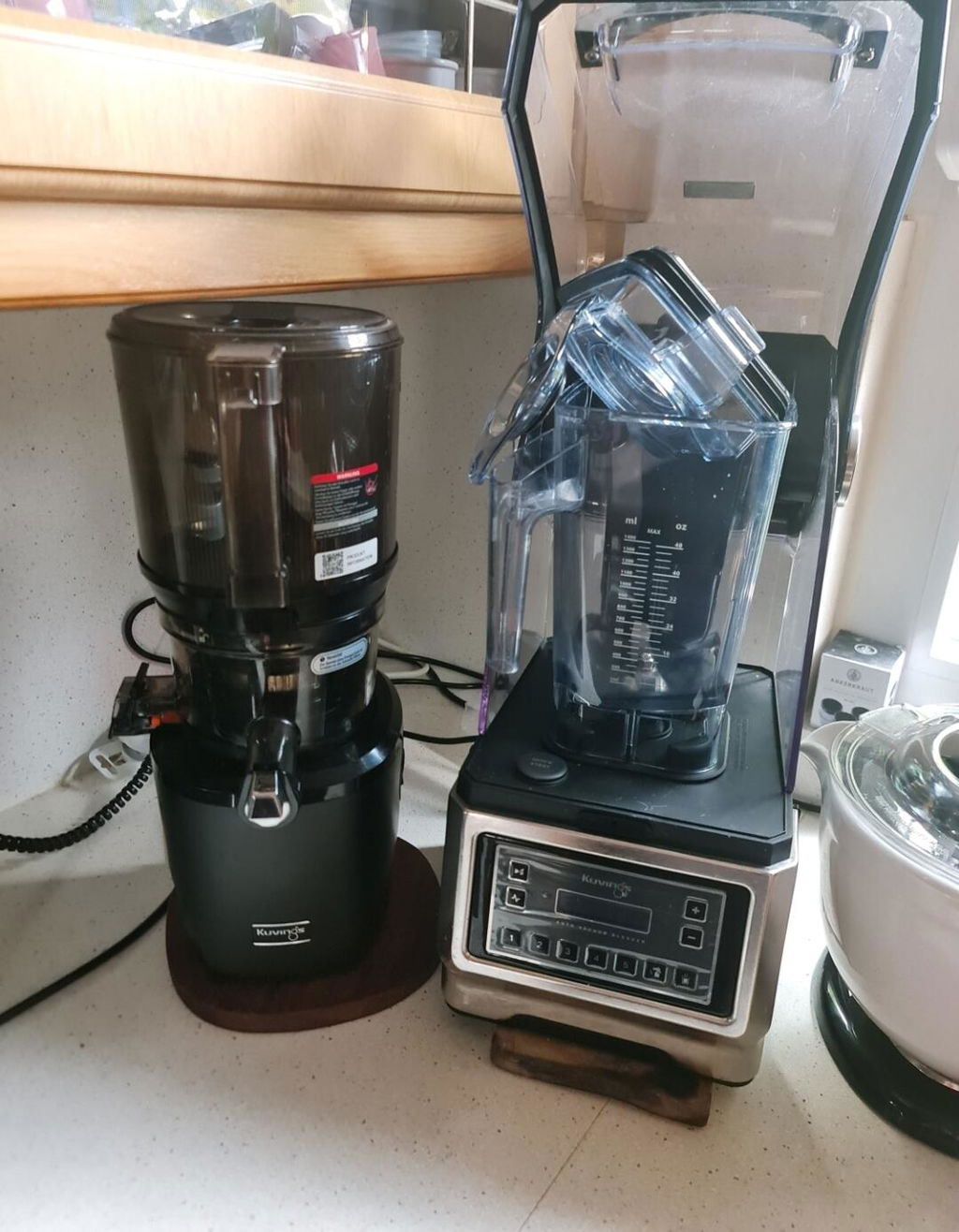
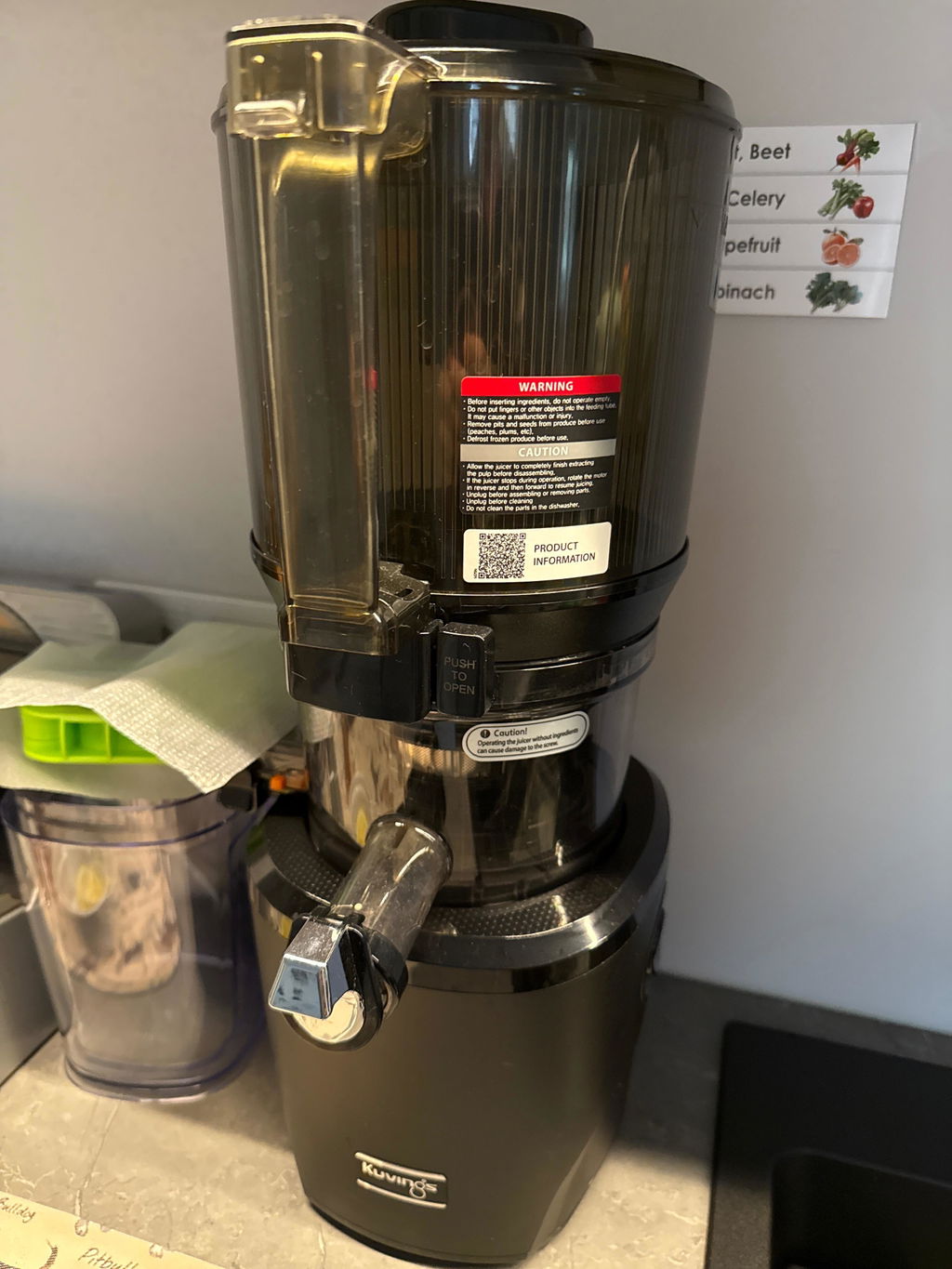
General questions about the product
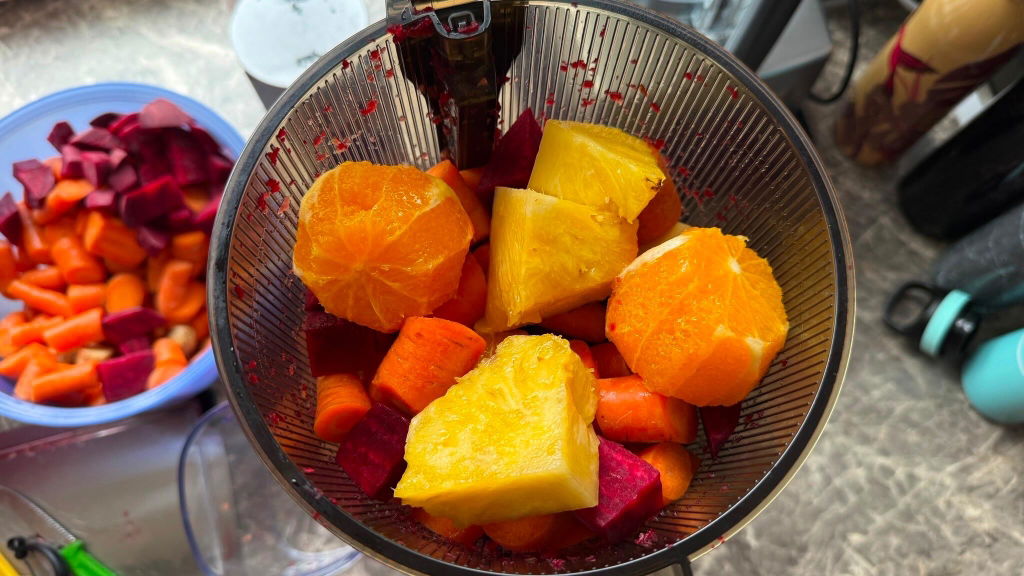
Both models feature a hinged-lid filling chute for adding whole ingredients. The EV0820 has an 82 mm wide filling chute, while the REVO830 has a slightly larger filling chute with a width of 90 mm.
In addition, the REVO830 is equipped with an automatic intelligent cutting and juicing mechanism specifically designed for carrots and celery.
The REVO830 also features wider pulp and juice channels, a larger housing, and slimmer juice/pulp cups than the EVO820.
For over 40 years, Kuvings has been developing appliances for a healthy life. We were the first juicer manufacturer to introduce a wide-mouth feed chute, allowing fruits and vegetables to be juiced without pre-cutting. This patented wide-mouth design reduces prep time and makes juicing quick and easy. We also manufacture our products ourselves, giving us an in-depth understanding of how our machines are designed and built.
Our juicers are very versatile – you can use them to make juices, smoothies, sorbets and frozen desserts, as well as instant nut milk!
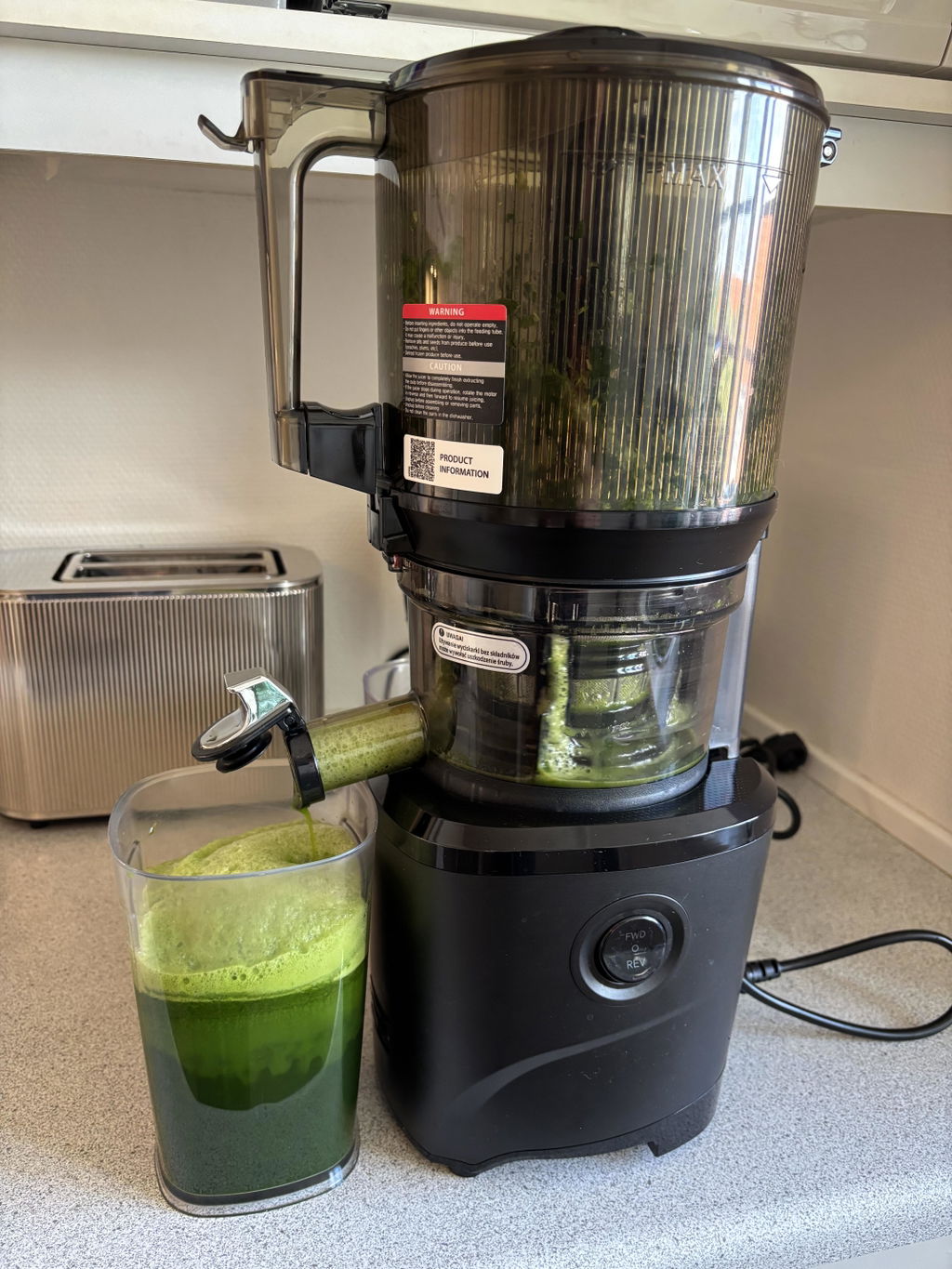
None of our slow juicers generate heat, so they are considered cold-press juicers. They don't have a hydraulic press like traditional cold-press juicers; instead, they use a heavy-duty auger to gently crush and press the ingredients without generating heat. This is the most compact and cost-effective way to make cold-pressed juice at home.
"Masticate" means "to chew," and that's exactly how our slow juicers process the ingredients. Masticating juicers crush and press the ingredients to extract the juice, much like we chew our food. This contrasts with centrifugal juicers, which use a rotating blade to shred the ingredients. Centrifugal juicers generate heat and air, which can impair the juice's nutrients. Masticating juicers retain the maximum amount of nutrients.
There are two types of dietary fiber: soluble and insoluble. Fruit and vegetable juices contain soluble fiber, which lowers cholesterol, regulates blood sugar, and much more. The pulp contains insoluble fiber, which simply adds bulk to stools. A balanced diet includes both types of fiber, but juicing allows you to consume a large amount of soluble fiber without filling your stomach with insoluble fiber.
All juicers for home use come with a recipe book.
Slow juicers are also known as "quiet juicers" because their motor runs more slowly and produces less noise than conventional high-speed juicers. Of course, our juicers aren't completely silent, but they are significantly quieter than high-speed juicers and blenders.
Product use
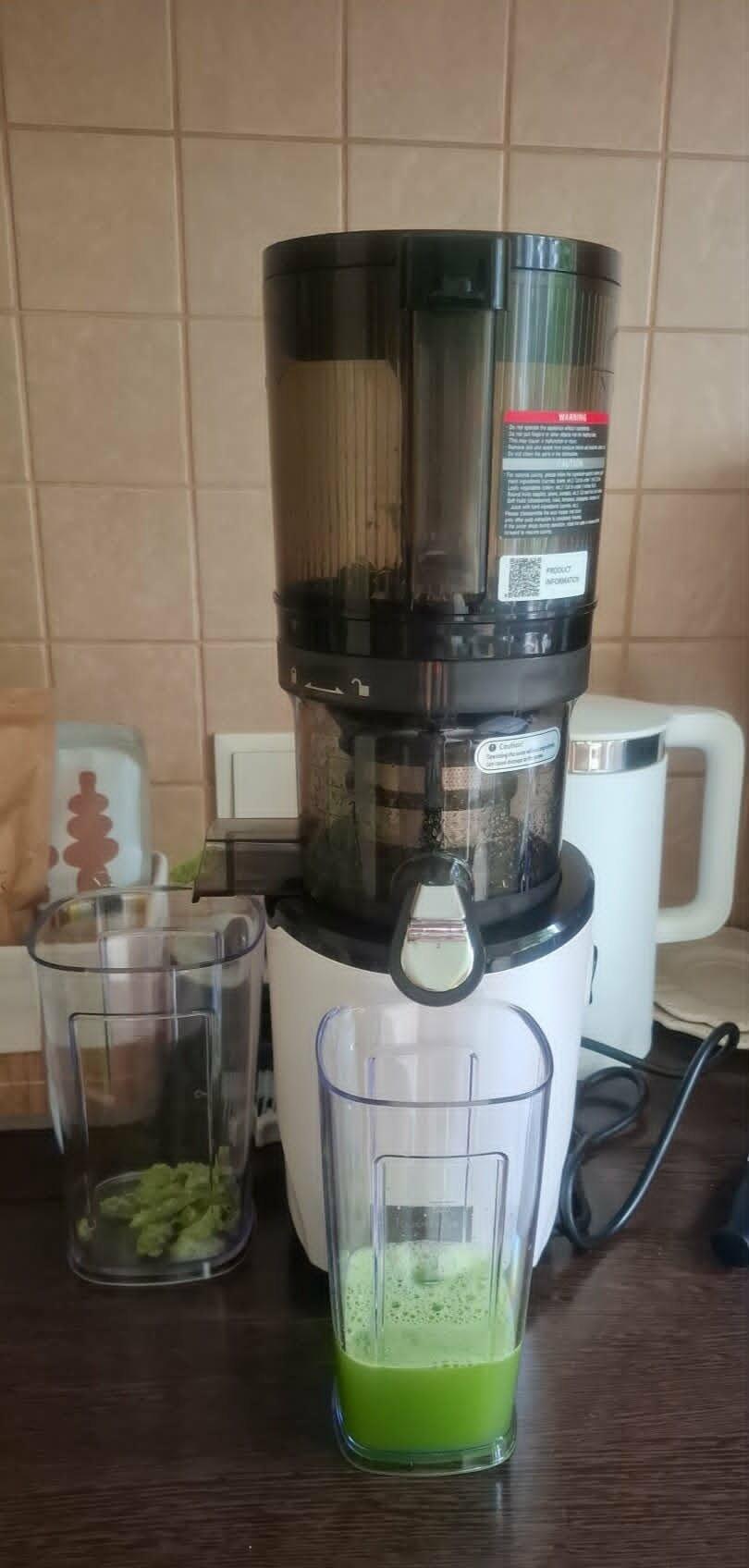
If the pulp container is not inserted correctly, juice may leak out. Please ensure that the pulp container is properly locked into place.
When juicing, you should combine low-fiber foods (such as carrots) with high-fiber foods (such as kale) to reduce the moisture content of the pulp and increase the amount of juice.
All produce varies, and freshness is often the deciding factor for juice content. To extract more juice from chilled produce, place it in clean water. When juicing, combine low-fiber foods (like carrots) with high-fiber foods (like kale) to reduce pulp moisture and increase juice yield. Check that the pressure silicone is properly installed. Also, cut any hard ingredients to the correct size.
Turn off the juicer and reassemble it correctly. Pay particular attention to ensuring that the sieve is properly seated and that no parts are damaged.
Ingredients
Yes, you can make most types of nut milk with all our vertical slow juicers. Soak the nuts overnight. Process the nuts in the juicer at a ratio of 1 part soaked nuts to 1 part water. Using this method, you can make milk from almonds, soy, cashews, and oats.
Yes, but be sure to use rolled oats. Check out our recipe for rich and creamy oat milk and the video tutorial!
Soft seeds – like those found in apples, oranges, melons, and lemons – can be juiced without any problems. Hard pits and stones – like those found in cherries, peaches, and plums – can damage the juicer and must be removed. If you are making seed milk, such as pumpkin seed milk, you must soak the seeds overnight before juicing.
No. You would have to grind over 200 apple seeds very finely and eat them to get cyanide poisoning. Besides, the apple seeds are excreted along with the fruit pulp.
Limes and lemons can be juiced with their peel. Oranges can also be juiced with their peel, although orange peel tastes bitter. If you frequently juice citrus fruits, take a look at our citrus attachment, specially designed for citrus juices.
There are many great ways to reuse fruit pulp. You can make veggie burgers, crackers, dog treats, bread, muffins, and much more.
Geräte & Funktion
Ein Entsafter trennt Saft und Fruchtfleisch – der Saft ist klar und leicht verdaulich. Ein Mixer verarbeitet alles zusammen und ergibt einen dickflüssigen Smoothie. Beide haben ihren Platz, je nachdem was du möchtest.
Ein Slow Juicer presst langsam und schonend bei nur 50–60 Umdrehungen pro Minute. Dabei entsteht kaum Wärme, wodurch Vitamine, Enzyme und Geschmack besser erhalten bleiben. Zudem oxidiert der Saft langsamer und bleibt länger frisch.
Hands-Free Modelle (AUTO6, AUTO8, AUTO10S) haben einen grossen automatischen Trichter – du füllst alles auf einmal ein und kannst die Küche verlassen. Whole Slow Juicer (REVO830S) haben zwei Einfüllschächte: einen breiten für ganzes Obst und einen schmaleren Auto-Cut-Schacht speziell für lange Zutaten wie Karotten und Sellerie.
Ja, viele Kuvings Geräte eignen sich dafür. Die Nüsse werden mit Wasser verarbeitet. Tipp: Nüsse vorher einweichen für ein besseres Ergebnis.
Ja, leicht angetaute Früchte funktionieren gut. Für Sorbet und Glacé gibt es spezielle Einsätze – bei manchen Modellen bereits im Lieferumfang enthalten.
Nutzung im Alltag
Meist nur wenige Minuten – je nach Menge und Zutaten. Mit den Hands-Free Modellen kannst du währenddessen andere Dinge erledigen.
Nein. Kuvings Slow Juicer arbeiten deutlich leiser als klassische Zentrifugalentsafter – ideal auch für früh morgens.
Nein. Die meisten Teile lassen sich schnell unter Wasser reinigen. Alle Geräte werden mit Reinigungsbürsten geliefert. Der Smart Cap spült den Entsafter zudem vor der Reinigung vor.
Ja, alle Kuvings Geräte sind für den täglichen Einsatz ausgelegt. Der Motor hat 15 Jahre Garantie.
Gesundheit & Nutzen
Ja – sie liefern Vitamine, Mineralstoffe und sekundäre Pflanzenstoffe in konzentrierter Form, die schnell aufgenommen werden.
Nicht wegwerfen! Der Trester enthält wertvolle unlösliche Ballaststoffe und lässt sich gut in Backrezepten, Suppen oder Dressings weiterverwenden.
Saft ist leichter trinkbar und schnell vom Körper aufgenommen. Ganze Früchte liefern zusätzlich Ballaststoffe. Beides hat seine Berechtigung.
Kauf & Auswahl
Der AUTO6 (CHF 399) ist ein idealer Einstieg – einfache Bedienung, grosser Trichter, leise und leicht zu reinigen. Für mehr Beratung stehen wir gerne zur Verfügung.
Der AUTO10S mit 3-Liter-Trichter ist ideal für Familien – grosses Fassungsvermögen, Hands-Free Betrieb, geräuscharm und auch für Smoothies und Glacé geeignet.
Der REVO830S ist dafür optimiert. Der Auto-Cut-Schacht schneidet lange, faserige Zutaten automatisch – kein Vorschneiden nötig.
Die Entsafter starten ab CHF 399 (AUTO6) bis CHF 1'486 (CS700 Profi). Die Mixer CB850 und CB1000 sind ebenfalls erhältlich. Für Unternehmen gibt es spezielle Modelle.