what is
cold-pressed juice?
what is
cold-pressed juice?
Consumers' growing interest in health and well-being is reflected in various product markets. Cold-pressed juices are a product of this movement and have become a popular beverage category in recent years. However, many consumers still lack a clear understanding of the precise definition of cold-pressed juices and how they differ from conventional, industrially produced juices.
Cold-pressed juices
Cold-pressed juice is produced using a special juicing process. Traditionally, it is considered to be untreated, unpasteurized juice obtained with a hydraulic press.
These machines grind the ingredients into a pulp, which is then placed in a filter bag. The bag is then pressed under high pressure, forcing the liquid out of the pulp. This method is reminiscent of the time when ingredients were crushed and pressed by hand (or foot) to make wine.
In the past, hand-operated machines, like the one shown on the right, were used to press the ingredients and collect the juice.


─
You get more juice, more nutrients, a longer shelf life in the refrigerator, and therefore greater benefit from fruits and vegetables.
Cold-pressed juice is superior to juice from a conventional juicer because it preserves all heat-sensitive nutrients such as vitamin C and enzymes. It also retains valuable nutrients that are lost when juicing fruits and vegetables with rapidly rotating blades (which generate heat).
Honestly, most people don't give juice too much thought.
SUMMARY
Cold-pressed juices offer more value for money and are also healthier.


─
Slow Juicer vs. Centrifugal Juicer
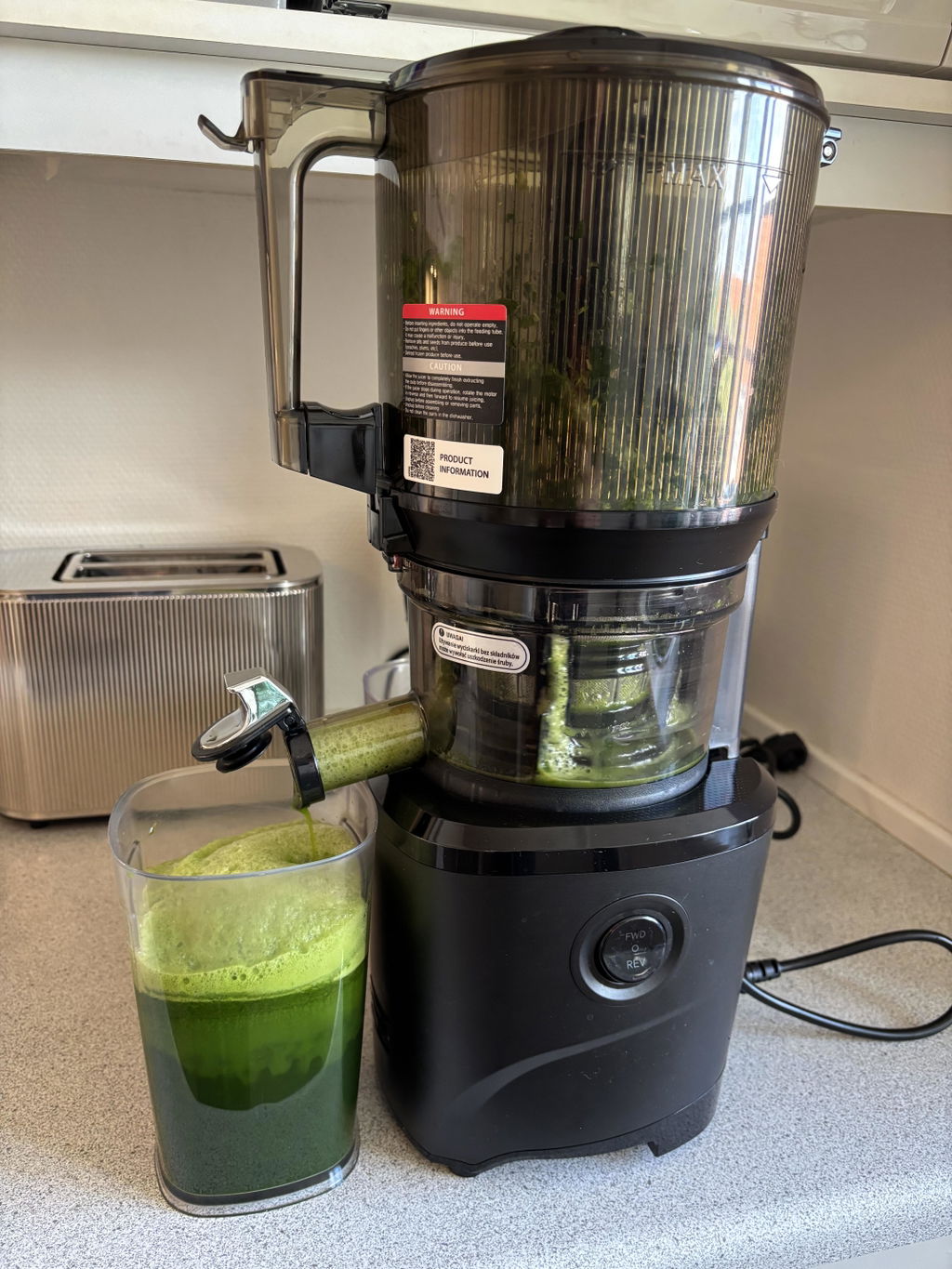
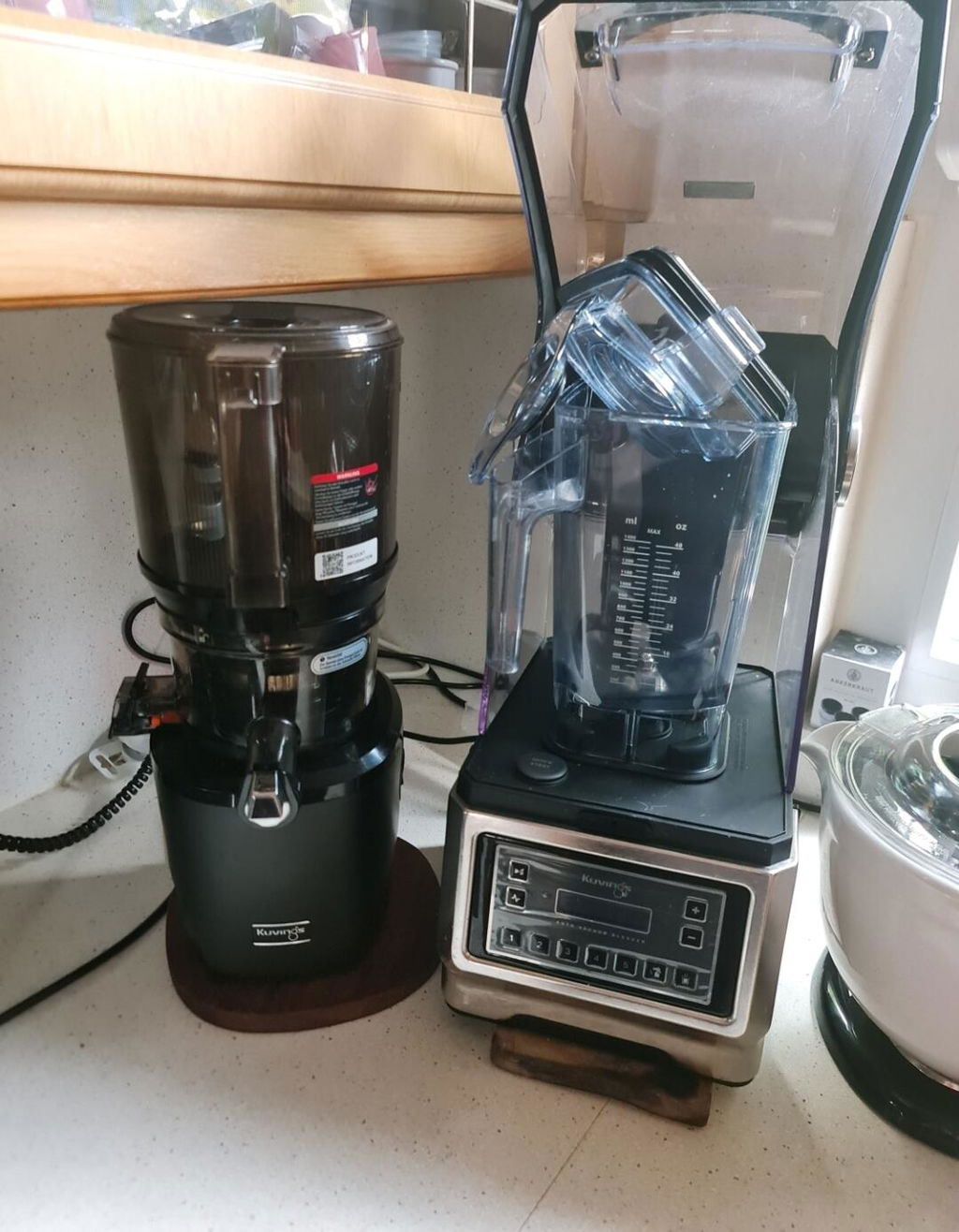
So you've already learned a bit about cold pressing, where fruits and vegetables are pressed (or squeezed) to extract the juice. The auger inside the machine rotates at about 52 revolutions per minute (rpm), which, ironically, is roughly the speed at which we chew. This is known as a slow juicer.
A traditional method for juicing fruits and vegetables is using a centrifugal juicer, whose blades rotate at approximately 12,000 revolutions per minute (rpm). While this juicing method is very fast, it unfortunately doesn't yield as many nutrients, as many vitamins and minerals are lost during the process. When you put fruits and vegetables into a juicer with rapidly rotating blades, these blades act like a machete – tearing and shredding the fruits and vegetables to extract the juice.
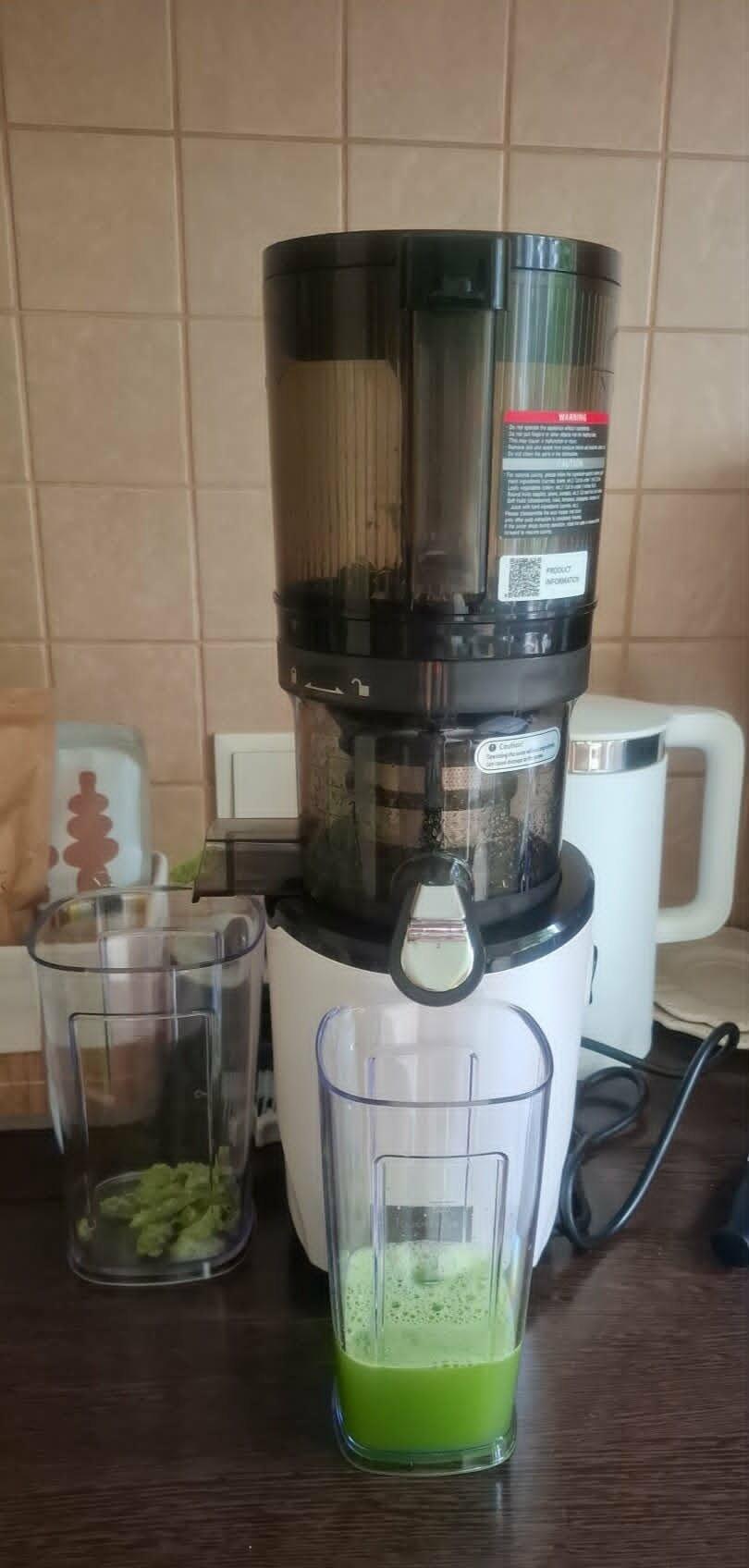
As the blades rotate in the bowl, the juice is separated into the pressing bowl and the pomace into the pomace bowl.
Rapidly rotating blades naturally generate heat. This destroys heat-sensitive vitamins before they reach the consumer. The result is a very watery, discolored juice.
This juice naturally begins to oxidize (decompose) because it needs to draw in air to keep the blades moving.
This can be recognized by the fact that, after the juice has been left to stand briefly, the water separates from the soluble fiber (the pulp). The oxidation process begins as soon as the device tears open the fruit with its metal blades.
SUMMARY
This type of juice cannot be stored and must be drunk immediately!
Of course, you'll still get good results, so don't panic! Just find out about the two types of juicers available on the market. The image below shows the difference between fast and slow (or cold-pressed) juice.


SUMMARY
While high-speed juicers cut and grind at around 12,000 revolutions per minute, slow juicers press and squeeze at around 50-60 revolutions per minute.
─
And what about the fiber?
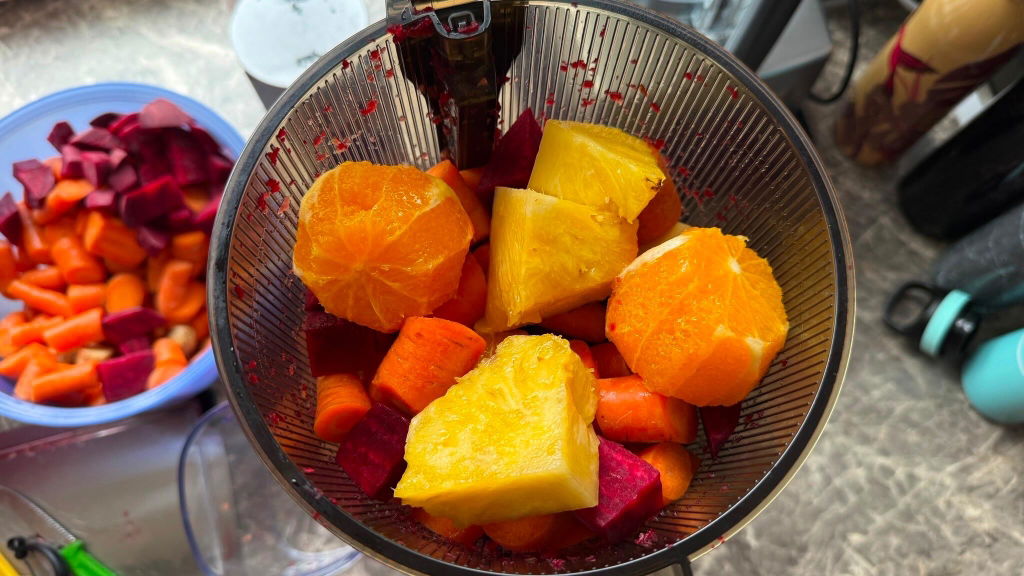
We don't sit down every day to eat ten carrots, a whole beetroot, three apples, a lemon, and a thumb-sized piece of ginger—we simply don't. But with a cold-press juicer, you can drink the juice in no time, and all the good nutrients nature provides go straight into your cells. The juice doesn't need to be digested; you've already taken care of that by removing the insoluble (non-degradable) fiber. So, let's get started, and let's get started!
And while we're on the subject, let's talk about the "elephant in the room" – dietary fiber.


Okay, we all know we need fiber. Yes, exactly!
But believe me, if you eat plant-based foods – that is, fruits and vegetables – you consume a lot of fiber.
Did you know that fruits and vegetables contain two types of fiber?
─
Insoluble and soluble dietary fiber.
Soluble fiber, as the name suggests, dissolves in water. Insoluble fiber, on the other hand, does not. While our bodies utilize both types, our cells only absorb the soluble fiber. Insoluble fiber does not nourish our cells. Its function is to clean the intestinal walls (like a broom) to eliminate waste products.
They are therefore an excellent cleansing agent for the intestines and thus necessary. However, when you drink juice, the insoluble fiber has already been removed. This is where many people despair. They know they need fiber, and when they see all the pulp, i.e., the insoluble fiber, in the pulp container, they become somewhat concerned. They fear they're missing out on something. And many try to use this pulp for baking and all sorts of other things, assuming it's the ultimate juice.

That's a misconception. Soluble fiber nourishes us. It contains all the vitamins, minerals, antioxidants, and essential salts. Our cells need soluble fiber to survive!
Insoluble fiber does not dissolve in water, remains intact, and travels through our gastrointestinal tract. As it does so, it absorbs fluid, combines with other digestive products, and essentially forms our stool, which is excreted through the intestines. That is its function.
It's our internal cleaning robot. Insoluble fiber contains nothing that's good for our cells. Absolutely nothing. As mentioned before, its job is cleansing. Does cold-pressed juice contain soluble fiber?
Yes. Soluble fiber is like "holy water"—it nourishes and supplies our cells. So, if you're juicing and putting the insoluble fiber (into the pulp container), you don't need to worry. The juice from your cold-press juicer is pure and unadulterated, just as nature intended—the healthiest juice in the world! Your body doesn't have to work hard to break down the insoluble fiber; the juicer does that for you.
You can drink it and your cells can utilize it almost immediately!
SUMMARY
Soluble fiber is part of our diet, is easily digestible, and is preserved in cold-pressed juice. Insoluble fiber, on the other hand, is meant to detoxify our bodies; it is indigestible and is excreted.
─
Cold-pressed juice has a longer shelf life when stored.
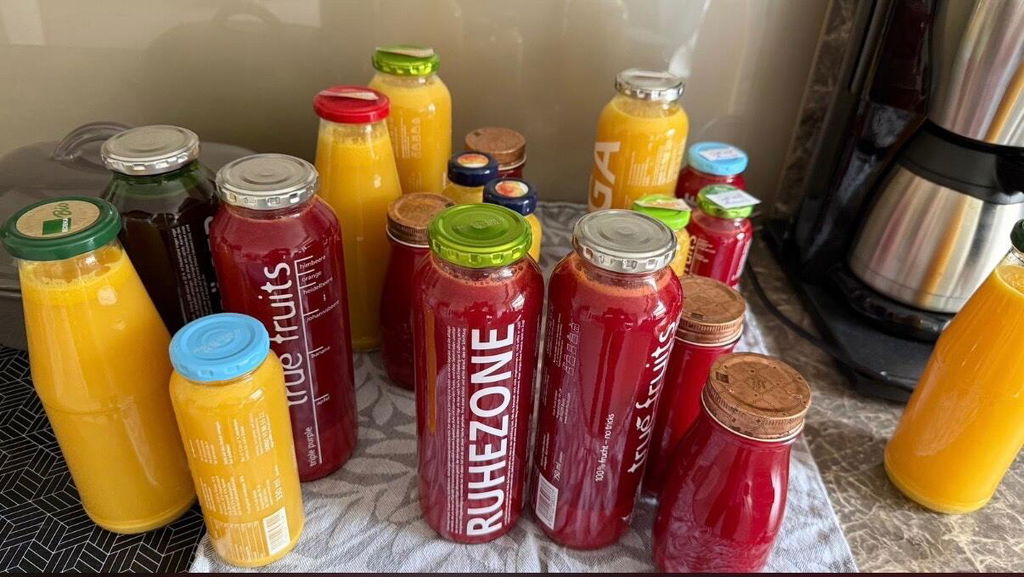
Because the juice is obtained by slow pressing and squeezing, it not only has a better taste, but can also be stored in glass bottles in the refrigerator for up to 3 days.

Since no oxygen is drawn in during juicing, the juice naturally keeps longer in the refrigerator. This is fantastic, because it allows you to prepare larger quantities of juice.
Imagine buying seasonal fruits and vegetables at the farmers market and juicing everything in advance to be prepared for the whole week! It's a great way to make the most of your produce while saving time, money, and effort. Cold-pressed juice can be made in larger batches and stored in the refrigerator – always ready to hand.
It enriches your life and offers you a new way to integrate many valuable natural ingredients into your diet.